
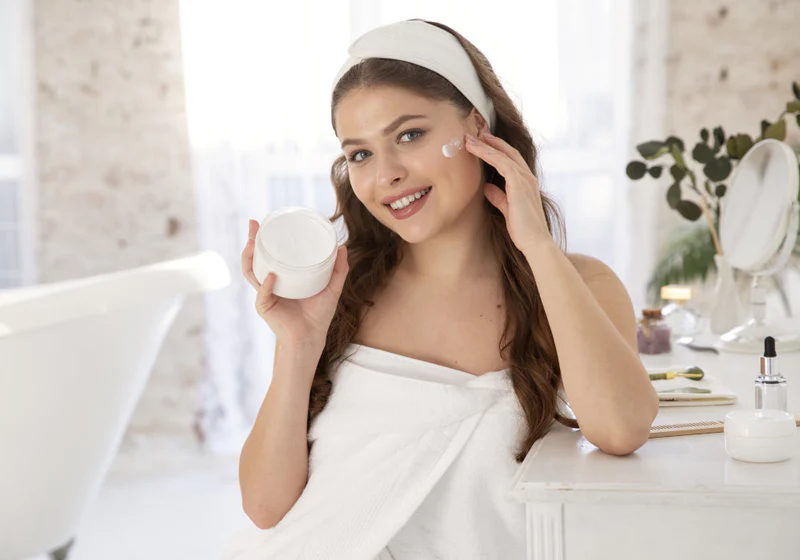

Layering moisturizers

Layering moisturizers involves applying several light layers of moisturizers rather than a single, heavy cream. This method optimizes hydration, allowing the skin to absorb moisture more efficiently to stay supple and nourished. The layering technique mimics the skin’s natural hydration by gradually delivering small amounts of moisture that penetrate deep without overpowering it.

How to proceed:

  1. Start with a hydrating toner : This is the lightest product, absorbs quickly, and prepares the skin for subsequent layers. Toners are often rich in ingredients like hyaluronic acid or aloe vera, which retain moisture.
  2. Follow with a hydrating serum : Serums are more concentrated and often contain active ingredients like niacinamide or glycerin, which attract moisture and strengthen the skin barrier.
  3. Finish with a moisturizer or oil : Apply a richer cream or oil to seal in moisture and protect against water loss. This helps the previous layers stay in place and prolong their effectiveness.

Layering according to the seasons

Layering moisturizers is especially helpful because skin’s needs vary seasonally. Here’s a guide to the types of products to prioritize depending on the time of year:

Spring :

  • Focus : Opt for light layers like a hydrating toner and serum, followed by a light moisturizer.
  • Why?: Temperatures are rising, but humidity may still be low, which can dry out the skin. Layering provides small, absorbable amounts of moisture without weighing the skin down.

Summer :

  • Focus : Choose water- or gel-based products that moisturize without weighing you down. A hydrating mist can be a great option for refreshing skin throughout the day.
  • Why ?: Skin tends to become oilier due to heat and humidity. Layering allows you to use light, non-greasy products, maintaining moisture without clogging pores.

Autumn :

  • Focus : Increase the amount of serum and switch to a slightly richer moisturizer to better protect the skin.
  • Why?: As the weather gradually cools, wind and dry air begin to dry out the skin. Layering helps gradually adapt the skin to colder temperatures by adding extra moisture in stages.

Winter :

  • Focus : Use richer products, such as oil-based creams or oils, as a final layer to seal in moisture and protect against the cold.
  • Why ?: Dry, cold winter air leads to severe dehydration and flaking. Skin needs enhanced hydration and a protective barrier against water loss. Layering ensures that moisture penetrates deep and stays locked in.

More Posts

3 Tips for More Beautiful Skin

Cleanse your skin every day
Clean skin is the key to a healthy, radiant glow. Cleansing your skin daily removes impurities, excess oil, and makeup that can clog pores and cause blemishes. Use a gentle cleanser morning and night to maintain your skin’s natural balance.
Facial massage

Take 5 to 10 minutes Facial massage is a simple and effective way to stimulate blood circulation, reduce swelling, and give your skin a natural